



Faculty of Arts
Presentation
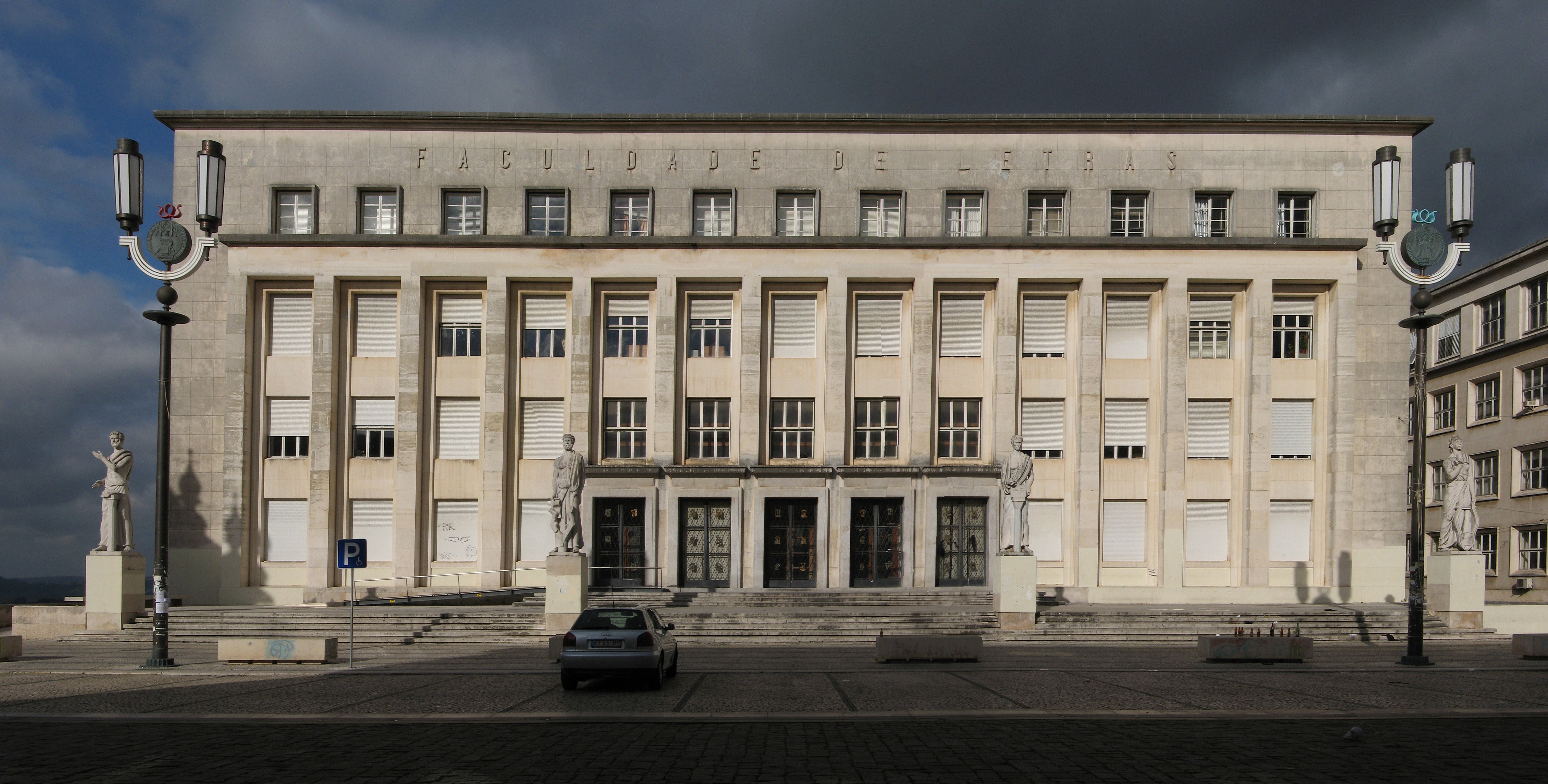
Created in 1911, the Faculty of Arts succeeded the former Faculty of Theology, beginning operations in a building located on the site now occupied by the General Library and Archives.
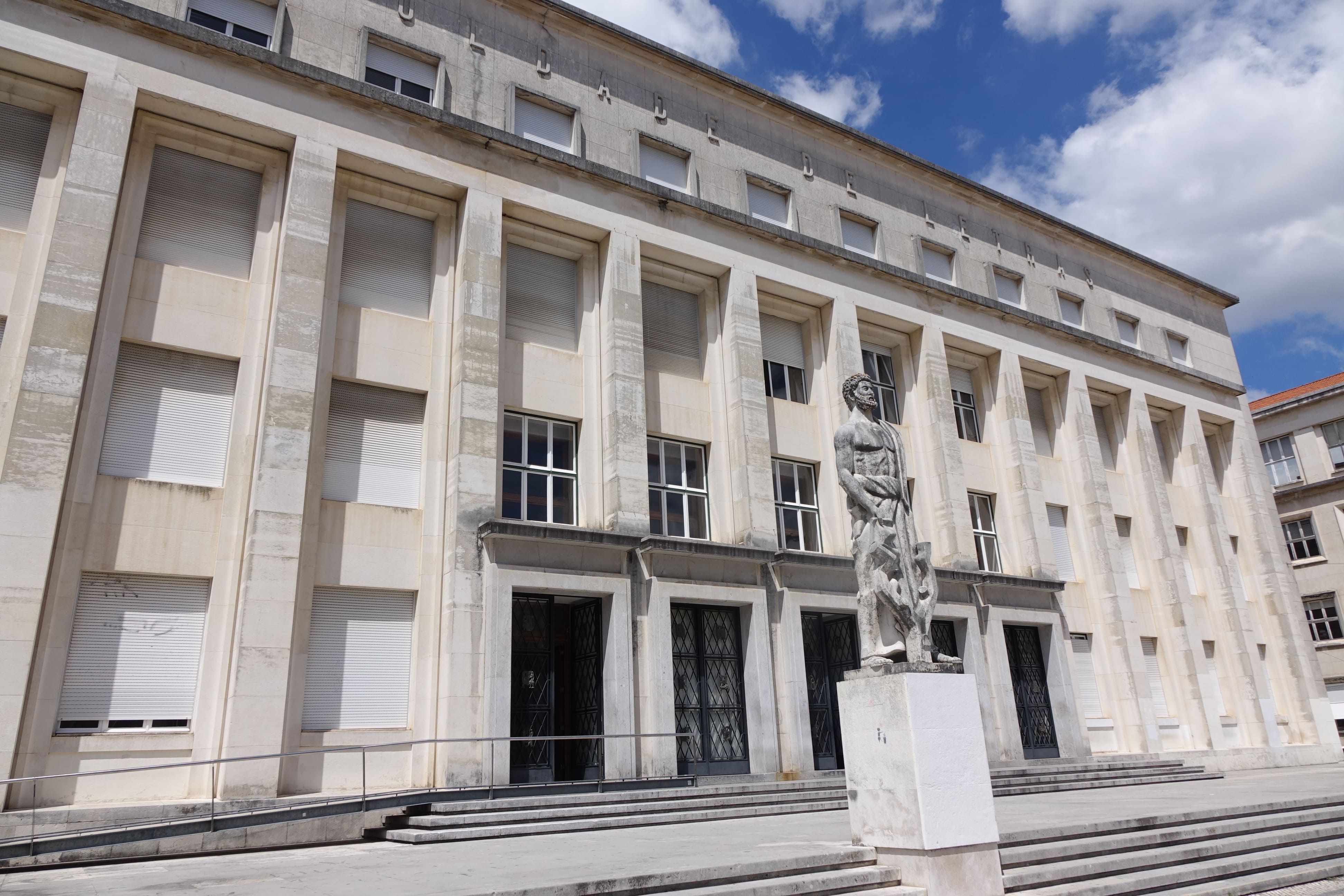
The design of the new building was entrusted to architect Alberto Pessoa, and the inauguration took place on November 22, 1951.
The wrought iron gates are decorated with bronze appliqués, executed at the School of Fine Arts by disciples of Barata Feyo; they symbolize classical works of the studies taught inside the building.
Also noteworthy are two frescoes in the faculty lobby: one is the Allegory of Classical Antiquity, by Joaquim Rebocho; the other is the allegory of the Glorification of Portuguese Genius, by the painter Severo Portela.
On the landing leading to the building are four evocative statues by Barata Feyo: Eloquence, Philosophy, History, and Poetry.
Read moreObservations
As an academic space, public access is mostly limited to events, conferences, or cultural activities.
Schedule
Monday to Friday
8:00 AM - 10:00 PM
Particularities
The Faculty houses departments in areas such as History, Philosophy, Languages, Literature, European Studies, Journalism, and Archaeology, among others. It also has a specialized library and several nationally and internationally recognized research centers.
Extra Information
Regularly, colloquia, congresses, exhibitions, and events open to the community are organized, contributing to the dissemination of knowledge and interaction with the public.
Aspetos Diferenciadores
The Faculty of Arts stands out for the richness of its cultural legacy and the breadth of its fields of study, serving as a meeting point between tradition and innovation in higher education.
History
With origins linked to the re-establishment of the University in Coimbra in the 16th century, the humanities have always played a central role at the institution. The current Faculty of Arts was formally established in 1911, as part of the reorganization of higher education after the implementation of the Republic. Throughout the 20th century, it consolidated itself as a privileged space for reflection on Portuguese cultural identity and the formation of prominent thinkers, writers, and researchers. Its influence extends far beyond academic borders, contributing to the cultural enrichment of the country.
Faculty of Arts
Largo da Porta Férrea
3004-530 Coimbra
gabdiretor@fl.uc.pt
www.uc.pt/fluc